

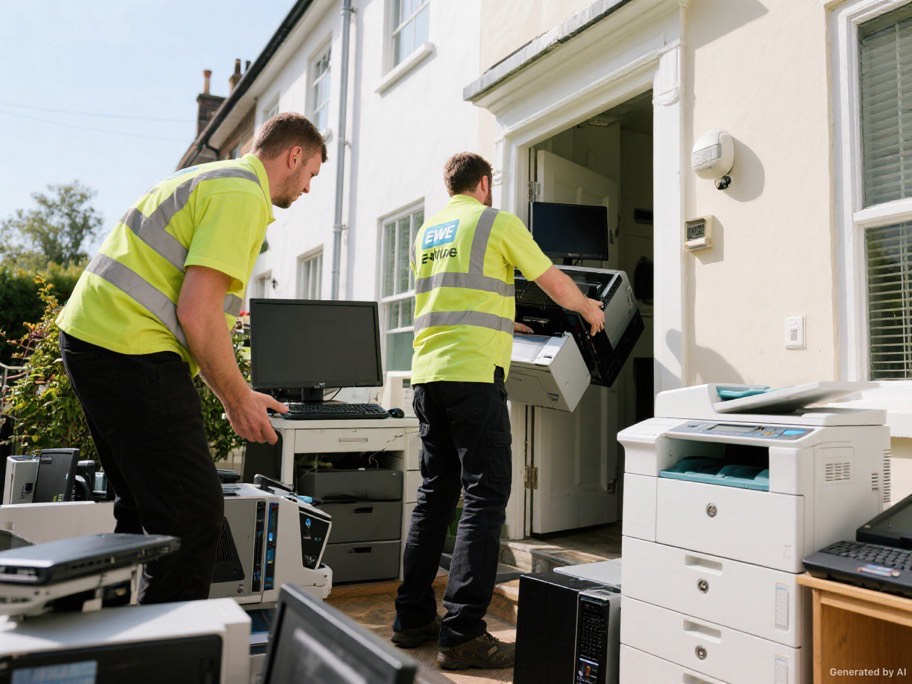
Office furniture removal sounds simple until the load includes monitors, docking stations, under-desk pedestals, broken chairs, and boxes of mixed IT clutter. Then it stops being a furniture-only job and starts behaving like a partial office clearance. The pricing difference is not only volume; it is handling time and waste separation.
Desks, chairs, and storage units can usually be quoted quickly from photos. WEEE cannot be treated the same way. Screens, printers, and power equipment need to be separated and logged properly so the business has a clean disposal trail. That is especially important for small relocations and managed-floor exits where facilities teams still need proper paperwork after the collection.
The line between furniture removal and full office clearance is simple: if the crew is only taking furniture from a ready space, it is a furniture job. If they are also clearing cupboards, kitchen waste, loose packaging, old cabling, or dead equipment, it should be priced as clearance. That is why we often pair office clearance in Westminster, office clearance in the City of London, and practical overflow collections like office clearance in Hammersmith.
If your office is around W1, EC3, or W6, send photos of the furniture and a separate shot of anything electronic. That single split keeps the quote clearer and reduces the chance of delays on the day.
For fast next-day bookings, the best results come from treating the job like a site handover. Show what is leaving, say what floor it is on, confirm the lift access, and mention whether the crew needs to dismantle anything. That turns a messy office exit into a straightforward lift-and-load.