

Office clearance in central London is never just about the furniture. The real problem is access. Westminster and the City of London both look close on a map, but they behave very differently when you are trying to load out desks, chairs, monitors, archive boxes, and mixed office waste without stalling the business day.
In Westminster, the main pressure is usually timing. Loading windows are tight, roads are busy, and a job can slow down fast if the building manager, porter, or lift booking is not lined up properly. In the City, the issue is often concentration: bigger buildings, more equipment, and more structured sign-in and dock access. That can actually make a larger job smoother, provided the paperwork and route are arranged before the crew arrives.
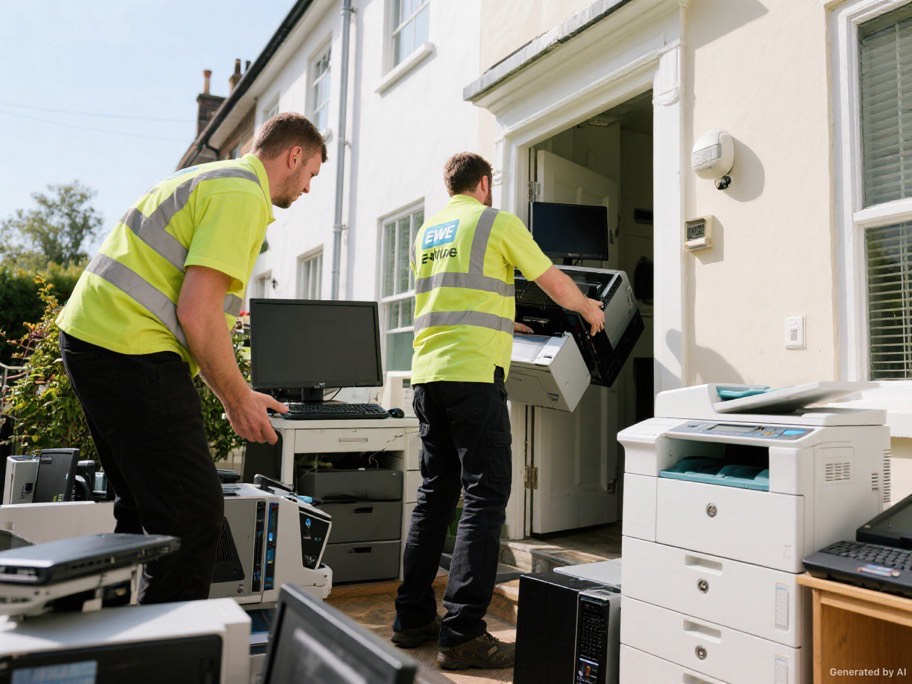
The safest way to scope an office clearance is to split the job into three groups: furniture, WEEE, and general waste. Desks and chairs are one workflow. Monitors, printers, and comms equipment need compliant handling. Mixed waste from kitchens, cupboards, and light strip-outs is another line entirely. That is why we usually compare office clearance in Westminster, office clearance in the City of London, and overflow commercial work such as office clearance in Waterloo and Bankside.
If you are booking from SW1 or EC2, the best thing you can do is send a quick floor walkthrough and state the preferred loading time. When the crew knows the floor count, lift rules, and whether the job must happen outside hours, the quote gets sharper immediately.
For most businesses, the cheapest office clearance is the one that keeps staff working while the waste moves in a controlled slot. That is why planning the building access usually saves more money than arguing over the disposal line item. If the site sits inside Westminster, expect timing discipline to matter as much as the load size.